Aetherbound Vol. II - The Dark Half - JRPG Music Pack
A downloadable asset pack
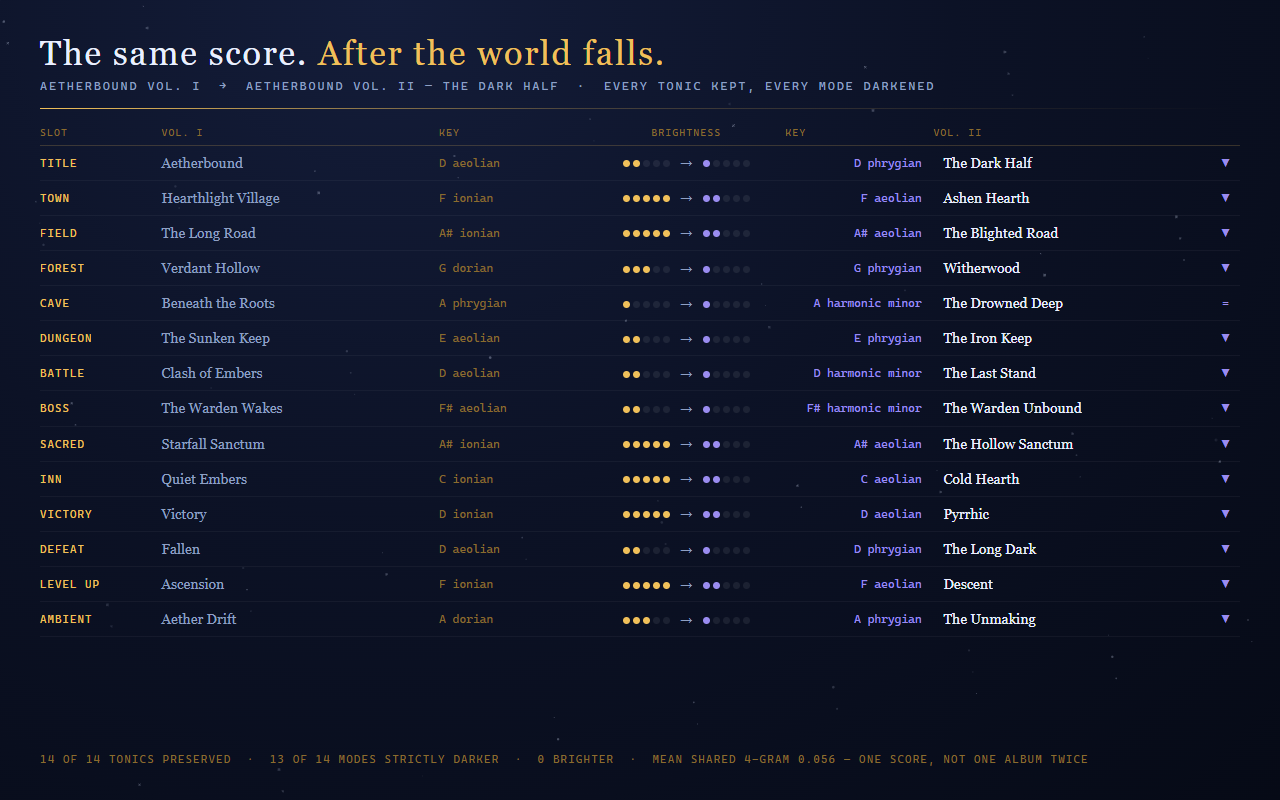
This is Vol. I after the world falls. Fourteen tracks covering exactly the same slots as Aetherbound Vol. I, built from the same eight themes, in the same keys - and every single mode is darker. The town is still in F. It is no longer in F major.
It stands alone, and it doubles. Own only this one and you have a complete dark-fantasy score. Own both and you have something no unrelated pair of packs can give you: because every slot keeps its tonic across the two albums, you can cut from Vol. I's town to Vol. II's town mid-game and hear a mode change rather than a key change. The same village, after.
What you get
- 14 x .ogg - OGG Vorbis, 44.1 kHz stereo, ready to drop in
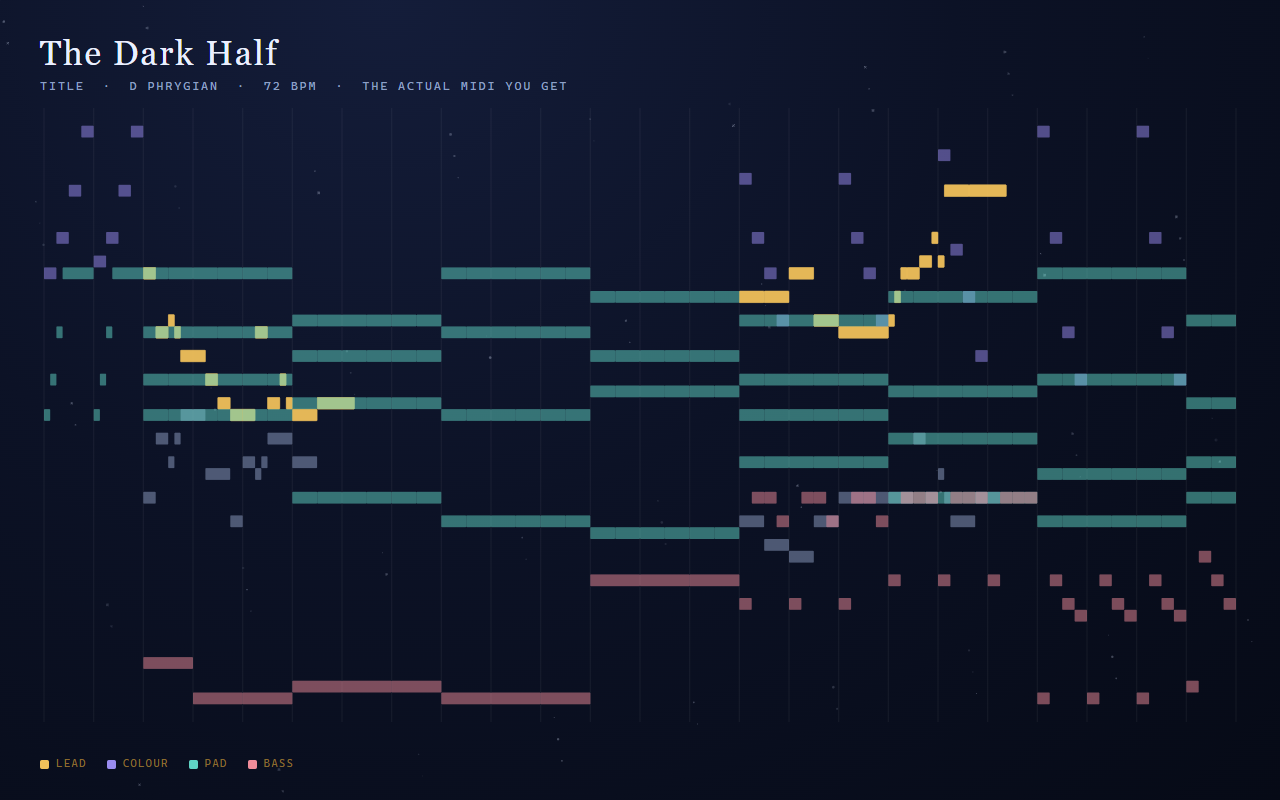
- 14 x .mid - the editable MIDI sources. Re-voice them, re-orchestrate them, change the tempo, pull out a single line. Almost no music pack ships these.
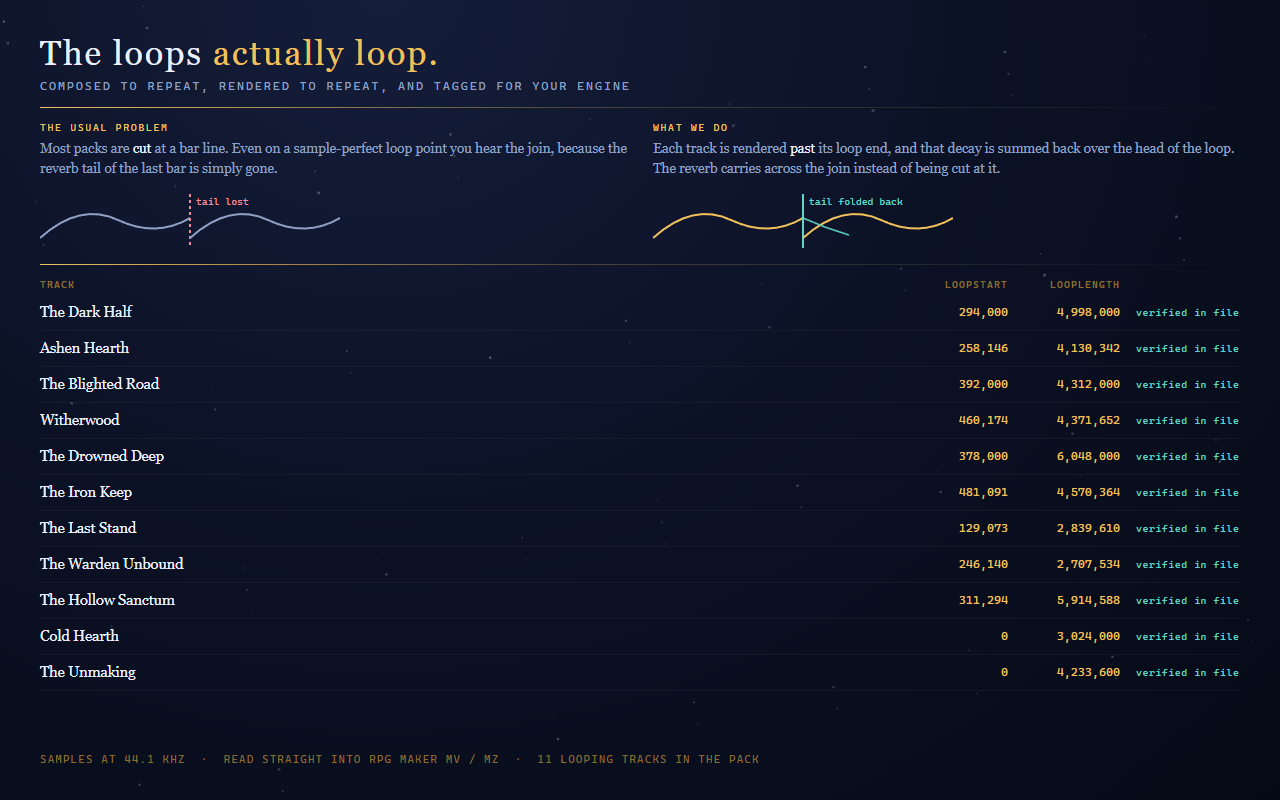
- Sample-accurate loop metadata - LOOPSTART and LOOPLENGTH in the OGG Vorbis comments, in samples, exactly what RPG Maker MV and MZ read
- Per-engine import notes for RPG Maker, Godot, Unity and GameMaker
- A royalty-free licence for commercial games. No per-title fee, no revenue cap, no attribution required.
The fourteen slots
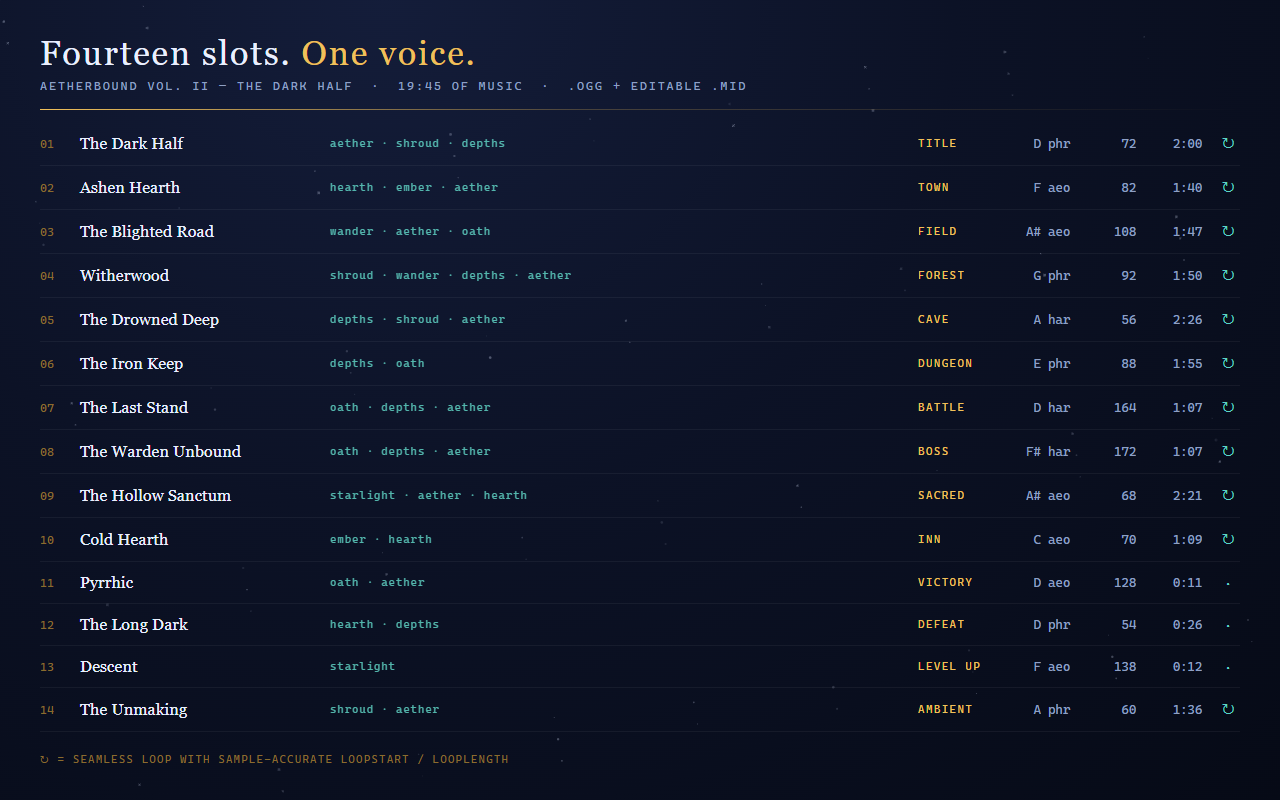
Title . Ruined town . Blighted field . Dead forest . Drowned cave . Iron dungeon . Battle . Boss . Hollow sanctum . Cold inn . Pyrrhic victory . Defeat . Descent . Ambient bed
19 minutes 45 seconds of music. Eleven different keys. Tempos from 54 to 172 BPM. Phrygian, aeolian and harmonic minor throughout, against Vol. I's ionian and dorian.
Why the loops actually loop
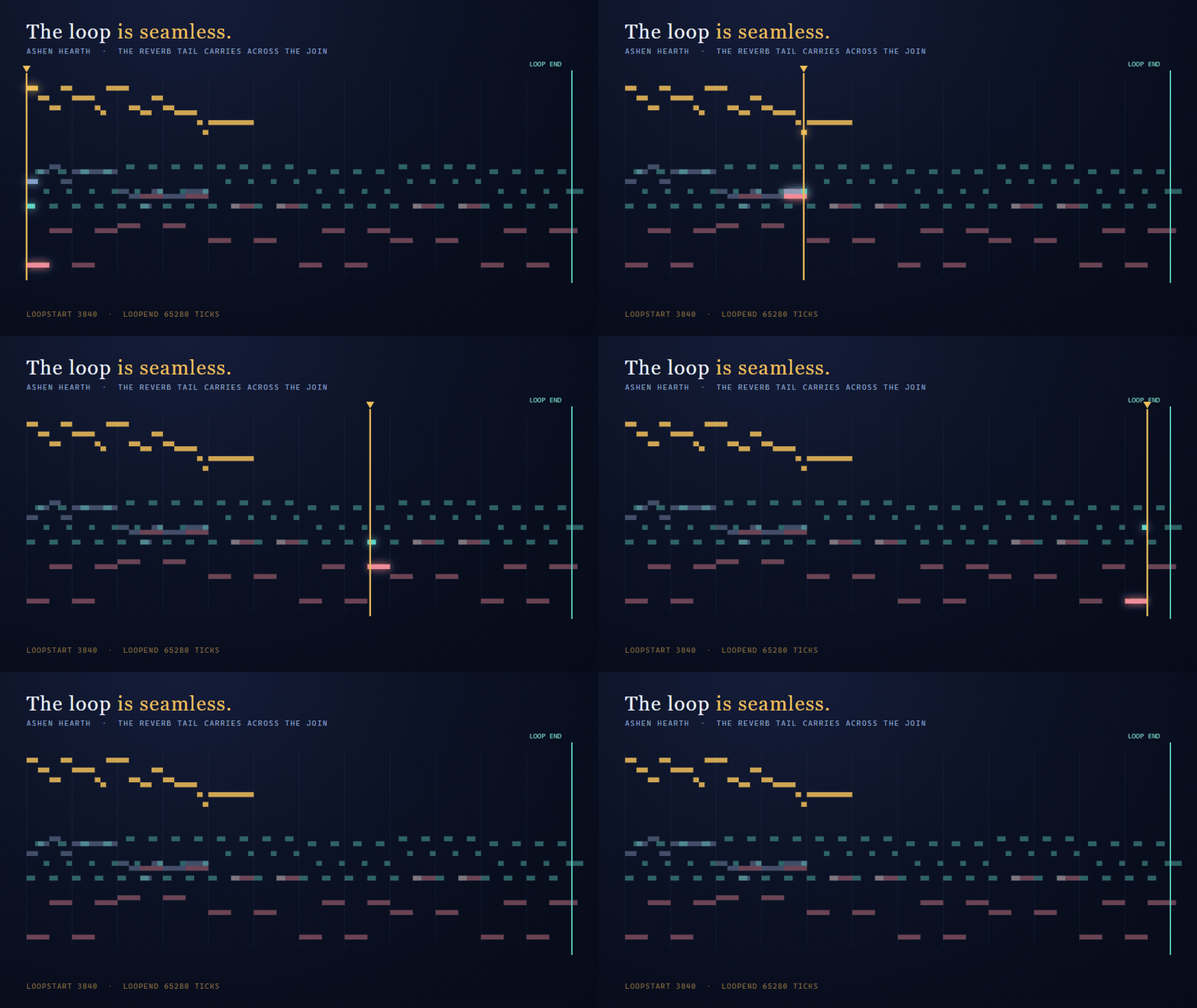
The most common complaint about bought music packs is that the tracks are not really loops. They were cut at a bar line rather than written to repeat. Even with a sample-perfect loop point, if the music has any reverb or natural decay you still hear the seam, because the tail is missing.
Two things were done about that. Composed to loop: the final bar is written to sound into the loop point, and the harmony resolves onto the chord the loop restarts on. Rendered to loop: each track is rendered past its loop end, and that decay tail is summed back over the head of the loop, so the reverb carries across the join instead of being cut at it.
Eight themes, one family, twice
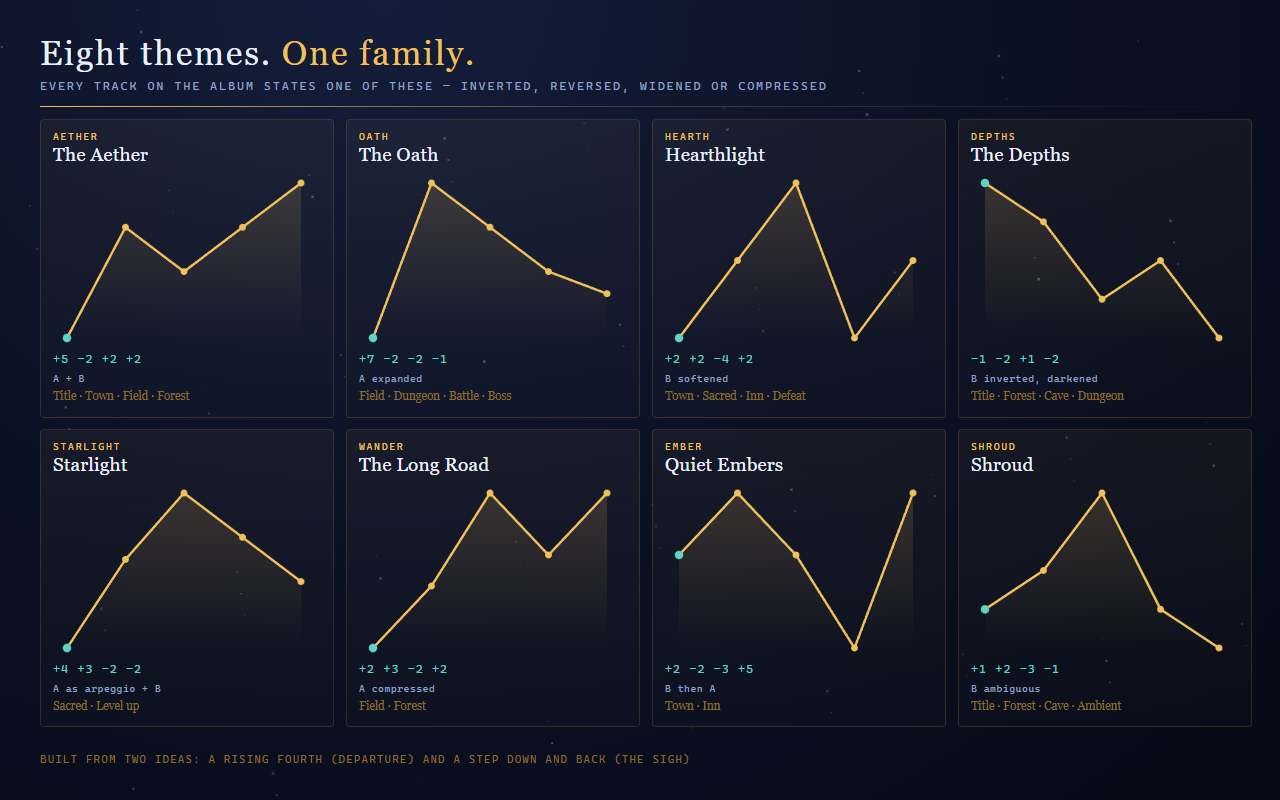
Both albums grow from the same eight hand-authored themes, built from two recurring ideas: a rising perfect fourth (departure) and a step down and back (the sigh). Vol. II states them inverted, backwards, widened and compressed - the sacred theme that opened Vol. I's Starfall Sanctum in A sharp major returns here as The Hollow Sanctum in A sharp minor, same melody, hollowed out.
How it was verified
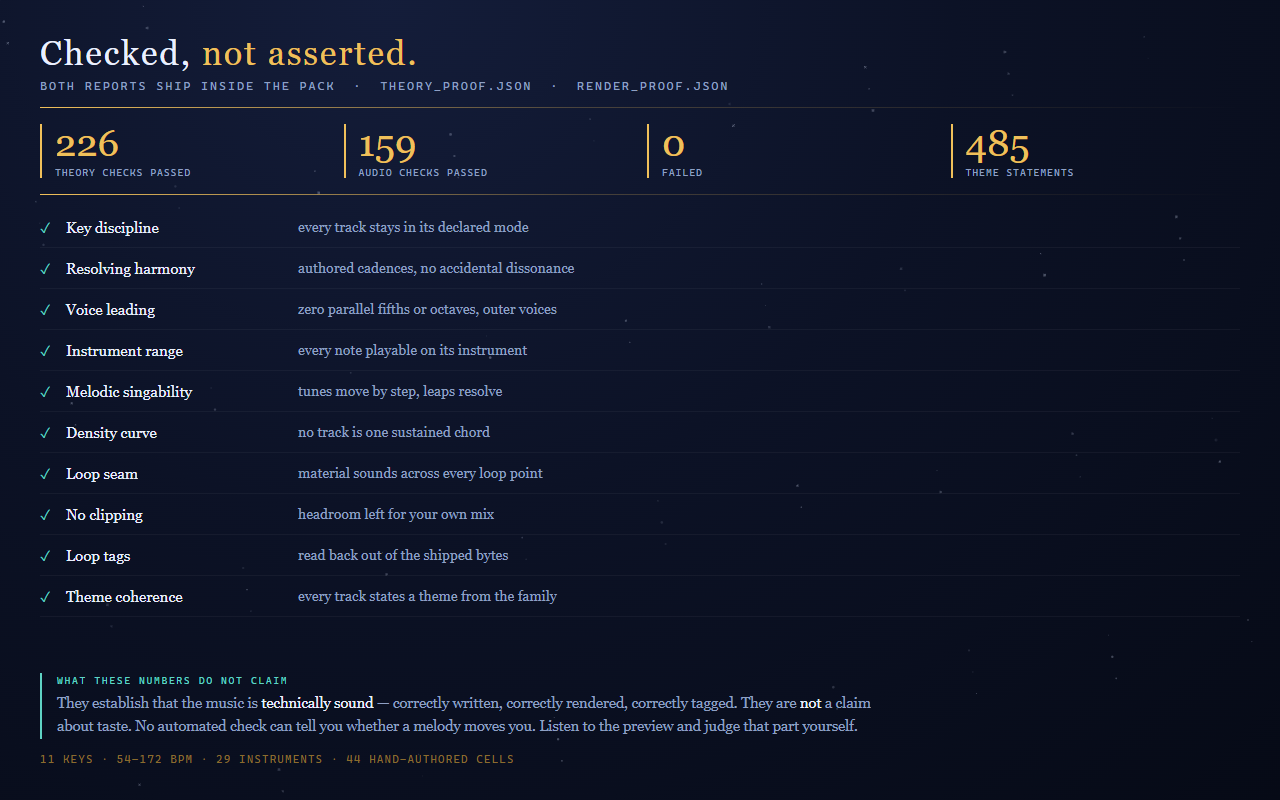
Every track was checked for key discipline, resolving harmony, voice leading (no parallel fifths or octaves between the outer voices), grid alignment, playable instrument ranges, melodic singability, a varying density curve, and loop-seam continuity. The audio was checked for silence, clipping, headroom, loudness, and that the loop tags in the shipped bytes match the composed loop.
418 checks passed, 0 failed - 254 on the composition, 159 on the audio, and 5 more that exist only for this album: they measure the relationship to Vol. I. Every slot keeps its tonic (14 of 14), 13 of 14 modes are strictly darker and none is brighter, and the two albums share no melodic material beyond the themes themselves - so this is one score, not one album released twice. All three reports ship inside the pack, so you can read them rather than take my word for it.
What those numbers are not: they establish that the music is technically sound. They are not a claim about taste. No automated check can tell you whether a melody moves you. That is what the free three-track preview on this page is for - the title theme, the town theme, and the boss theme, complete and unmodified, with their MIDI sources. The boss track is in there on purpose: it is the battle theme transformed, so it is the one claim you can only check by ear.
Engine notes
RPG Maker MV / MZ - copy the .ogg files into audio/bgm/. The loop tags are read automatically. No plugin, no configuration. Stingers go in audio/me/ or audio/se/.
Godot 4 - import the .ogg, then set Loop Mode to Forward and enter the Loop Begin value from the included track sheet.
Unity - Streaming for the long tracks, Decompress On Load for the stingers. Use the sample values with a scripted timeSamples jump.
GameMaker - drop the .ogg in as an audio asset and use the LOOPSTART value with audio_sound_loop_start().
Anything else - the .mid files are plain Standard MIDI Format 1 and open in any DAW or tracker.
Pairs with
- Aetherbound Vol. I — the same fourteen slots before the fall. Same themes, same tonics, brighter modes. The two albums are one score.
- Verdant 01 — Overworld Tileset — 239 tiles, 4 complete 47-mask autotile sets for RPG Maker MZ, Tiled and Godot.
- Wildmark 01: The Party — Four playable adventurers, 4 directions, 6-frame walks, native 128px and 64px.
- Sigil Core — Every skill gets a unique animated magic circle, derived from its own data.
Made by Core Systems Asset Factory. If you are building in RPG Maker MZ or GameMaker, the same shop has plugins and systems that go alongside this: browse the full catalogue.
Purchase
In order to download this asset pack you must purchase it at or above the minimum price of $14.99 USD. You will get access to the following files:
Download demo
Development log
Leave a comment
Log in with itch.io to leave a comment.